
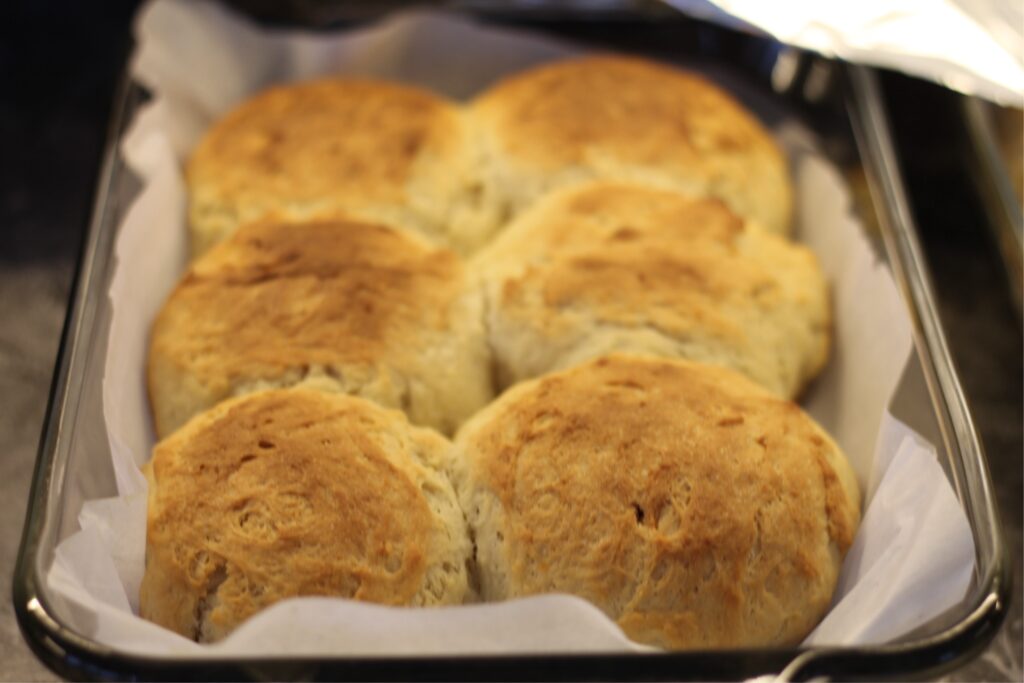
Gluten Free Vegan Soft & Fluffy Potato Dinner Rolls (Ultra Light, Not Dense + Best Storage Tips)
If you’ve ever made gluten free vegan dinner rolls that came out heavy, gummy, or dense, you’re not alone. Gluten-free baking doesn’t behave like traditional bread, and small timing or ingredient shifts can make a huge difference in texture.
These dinner rolls are designed to be soft, fluffy, and airy—without the typical “brick-like” texture. The secret is a combination of mashed potatoes for moisture, a short rise window, and just enough structure-building ingredients to trap air without weighing the dough down.
This guide also includes pro tips to help you avoid dense rolls, plus storage tricks so they stay soft the next day (not dry or crumbly), and how to adjust the recipe if you’re using eggs instead of aquafaba and skipping potato protein.
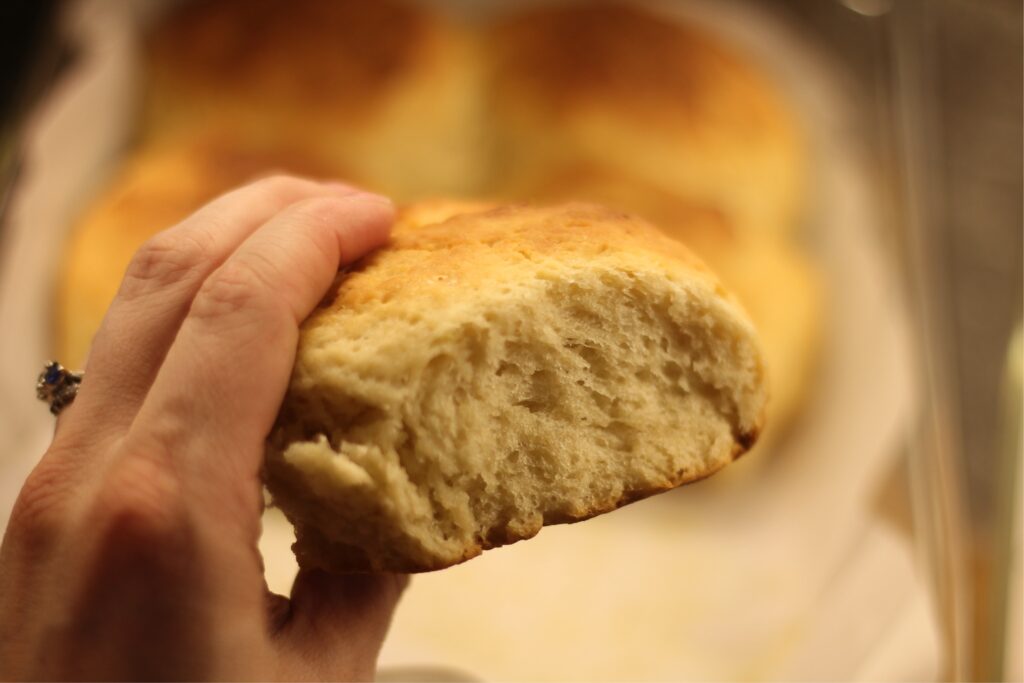
Why These Gluten Free Vegan Rolls Work
Most gluten-free breads fail for one of three reasons:
- too much flour → dry and dense
- too long of a rise → collapse and heaviness
- not enough structure → no lift, no fluff
This recipe balances all three using:
- mashed potatoes for moisture and softness
- psyllium husk for structure (gluten replacement)
- a short, controlled rise
- high hydration dough (key for fluffiness)
Instead of forcing gluten-free dough to behave like wheat dough, we work with its natural structure: a thick, sticky batter that traps air rather than being kneaded.
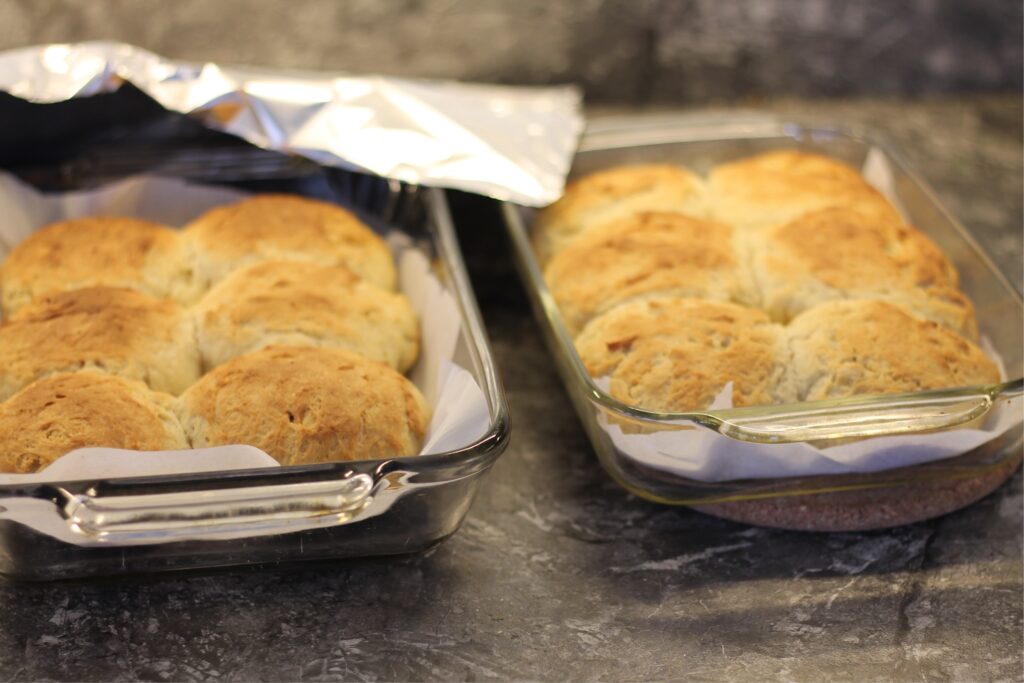
Ingredients Overview (What Each One Does)
Mashed potatoes
This is your secret weapon. Potatoes:
- hold moisture
- soften crumb
- prevent dryness after baking
Psyllium husk
This replaces gluten structure. It:
- binds the dough
- traps air bubbles
- prevents crumbling
Potato protein (optional but powerful)
Adds:
- lift
- slight elasticity
- better bread-like bite
Aquafaba (or egg alternative)
Helps:
- lighten texture
- improve rise
- add softness
Yeast + sugar
Creates gas bubbles for lift—but in gluten-free baking, we only need a short, controlled rise.
The Most Important Rule: Don’t Overproof
This is where most gluten-free rolls fail.
Unlike wheat dough, gluten-free dough:
- cannot “hold” structure for long fermentation
- weakens if over-risen
- collapses easily after peak rise
Ideal rise time:
30–40 minutes ONLY
You are looking for:
- slight puffing
- visible expansion
- soft, airy surface
NOT:
- doubling in size
- over-expanded or jiggly dough
If you wait too long, the dough will rise and then fall in the oven, creating dense centers.
Instructions (Optimized for Fluffiness)
- Activate yeast in warm water with a pinch of sugar until foamy (5–10 minutes).
- Mix wet ingredients: mashed potatoes, sugar, vegan butter, and aquafaba.
- Add dry ingredients: gluten-free flour, salt, psyllium husk, and potato protein.
- Combine everything and beat for 3–5 minutes until a thick, sticky dough forms.
- Immediately shape into rolls (no resting stage).
- Let rise for exactly 30–40 minutes until slightly poofy.
- Bake at 375°F for 20–25 minutes until golden and cooked through (internal temp 200–210°F).
Pro Tips for Extra Light, Fluffy Dinner Rolls (No Density Allowed)
1. Your dough should look “wrong”
This is important.
Gluten-free roll dough should be:
- sticky
- soft
- almost scoopable
- NOT kneadable
If it feels like traditional bread dough, it’s too dry.
👉 Add 1–3 tablespoons warm water if needed.
2. Beat the dough, don’t knead it
Mixing for 3–5 minutes is not optional.
This step:
- hydrates flour
- activates psyllium
- distributes air evenly
Skipping it = dense rolls.
3. Rise until “poofy,” not doubled
Think:
- marshmallow puff
- soft expansion
- light dome shape
If you wait for a full rise, you’ll lose structure.
4. Don’t underbake
Undercooked gluten-free bread = gummy center.
Bake until:
- deep golden top
- firm but soft interior
- 200–210°F inside
5. Steam helps softness
Place a small oven-safe pan of hot water in the oven while baking.
This:
- keeps crust soft
- improves oven spring
- prevents dryness
6. Let them cool fully before cutting
Cutting too early releases steam → gummy texture.
Wait at least 30–45 minutes.
Storage Tips (This Is Where Most People Go Wrong)
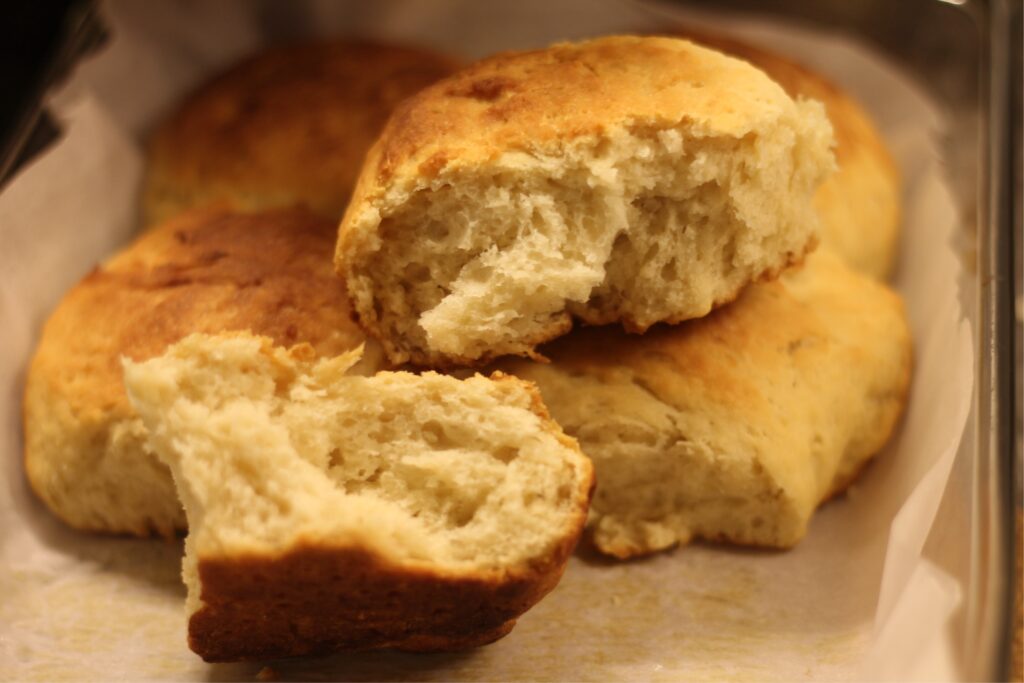
Gluten free vegan rolls dry out fast if stored incorrectly.
Same day:
- keep in a covered container or wrapped in a towel
- avoid sealing while hot (creates moisture collapse)
Next day best texture:
- store in an airtight container at room temp
- add a folded paper towel inside to absorb excess moisture
Reheating trick (game changer):
- microwave 10–15 seconds with a damp paper towel
or - warm in oven at 300°F for 5–8 minutes
This restores softness almost like fresh-baked.
Freezing:
- freeze fully cooled rolls
- wrap tightly in plastic or freezer bag
- thaw at room temp, then reheat
They hold surprisingly well if frozen properly.
Ingredient Tweaks (Eggs vs Aquafaba vs Potato Protein)
If not allergic you can use eggs instead of aquafaba
Replace:
- 1/4 cup aquafaba → 1 large egg
What changes:
- slightly richer texture
- more structure
- slightly less “bouncy” softness
To balance:
- add 1–2 tablespoons extra warm water if dough feels too stiff
Eggs can actually help stability, but they make the crumb slightly tighter.
If skipping potato protein
You can remove it, but expect:
- slightly less lift
- softer, more delicate structure
To compensate:
- increase psyllium slightly (about 1/2 tsp more)
- or add 1 extra tablespoon aquafaba/egg
If you want maximum fluffiness (best combo)
- aquafaba
- potato protein
- psyllium husk
This combination gives the closest texture to traditional dinner rolls.
Final Thoughts
These gluten-free vegan potato dinner rolls work because they respect how gluten-free dough actually behaves: it needs moisture, quick structure, and a controlled rise—not long fermentation or kneading.
Once you understand that the dough should stay soft, sticky, and lightly puffed (not doubled), you’ll consistently get rolls that are:
- fluffy
- tender
- never dense
- and still soft the next day
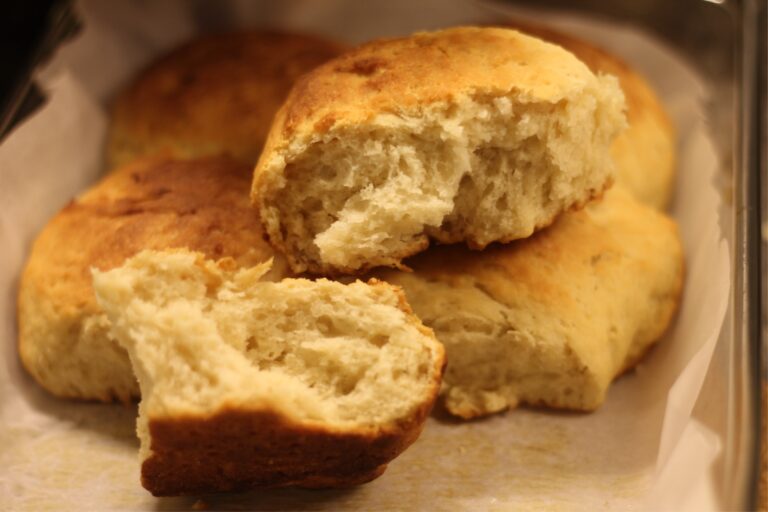
Gluten-Free Vegan Soft & Fluffy Potato Dinner Rolls
- Total Time: 1 hour 20 minutes
- Yield: 12 XL rolls 1x
Ingredients
- 2 packages (1/4 oz each) active dry yeast
- 1 1/3 cups warm water (110–115°F), divided
- 1 cup boiled potatoes (smashed)
- 2/3 cup sugar
- 2/3 cup vegan soy free butter or palm shortening (softened)
- 3 tbsp potato protein (or 2 eggs if you can have eggs; skip the aquafaba if you do eggs)
- 1/4 cup aquafaba (optional but highly recommended)
- 2 1/2 tsp salt
- 5 1/2 cups gluten-free flour blend (with xanthan gum; we like namaste)
- 1 tbsp light psyllium husk powder
Instructions
- Activate yeast in warm water + sugar for 5–10 minutes until foamy.
- Mix wet ingredients together.
- Add dry ingredients and beat into a thick, sticky dough.
- Shape immediately into rolls and place in pan.
- Rise once for 30–40 minutes. Dough should look slightly puffed (poofy), not doubled.
- Bake at 375°F for 20–25 minutes until golden and cooked through.
- Prep Time: 15
- Rise: 40
- Cook Time: 25