
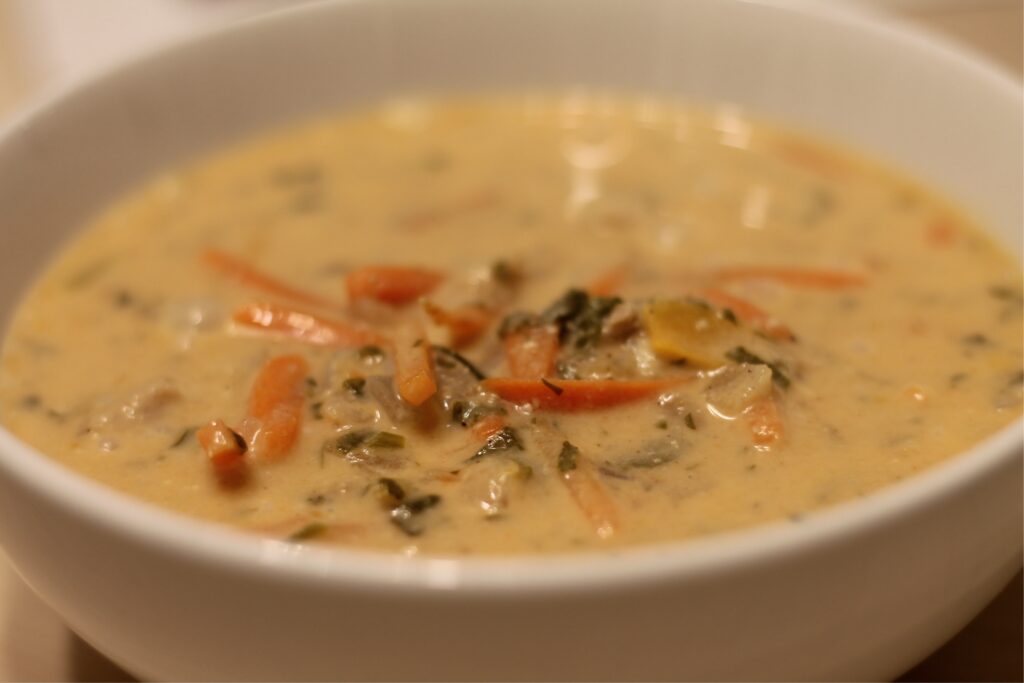
A Cozy Bowl of Coconut Chicken Curry
I love cooking. I love flavors. And I especially love when I can make a meal that’s warm, comforting — and friendly to many common food allergies. This Thai coconut chicken curry recipe is one of those dishes. It’s creamy, aromatic, rich — and yet free from soy, gluten, eggs, dairy, fish, and nuts. That makes it a great option if you or someone you care about avoids those allergens. The curry mixes tender chicken, coconut milk, warming spices, and leafy spinach. The result is a bowlful of comfort that feels both satisfying and wholesome.
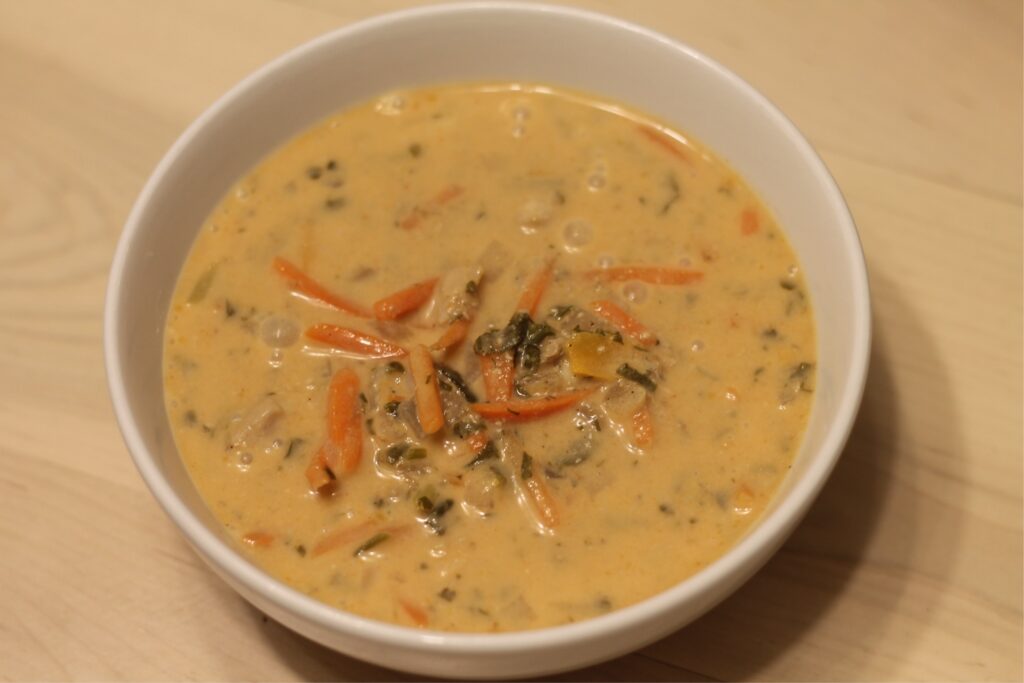
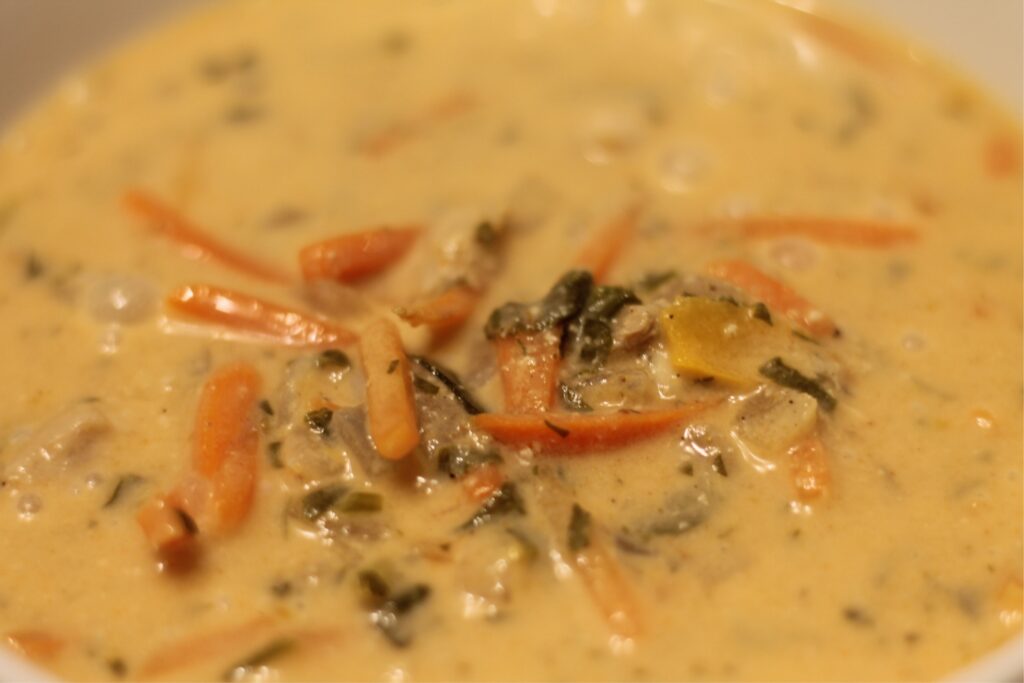
From the first aroma of onions and garlic sizzling in coconut (or olive) oil, you know you’re in for something special. As the curry simmers, the broth becomes creamy. The shredded carrots add a gentle sweetness and a bit of body. The spinach wilts softly. Finally, a splash of lime juice and a scattering of fresh cilantro (or basil) brighten the flavors. Served with rice, quinoa, or naan — though plain and hearty on its own — this curry warms your belly and soothes your soul.
History of the Dish
Though this exact recipe is a homemade adaptation, its roots trace back to centuries of culinary evolution in Thailand. Curries using coconut milk and spice pastes emerged from a mix of local tradition and foreign influence. According to research on the evolution of Thai curry pastes, the origins date back to the early days of the Sukhothai period — more than 700 years ago — when people began mixing locally grown herbs, spices, and available proteins for stews and soups. (ThaiJo)
Over time — especially through the Ayutthaya period — as trade and cultural exchange grew, curry pastes became more complex. Ingredients like galangal, lemongrass, pepper, coriander, and a variety of spices from near and far came into Thai cooking. (ThaiJo)
The addition of coconut milk (or cream) is a major turning point in Thai curry history. Coconut milk deepened the texture and softened the heat, creating the luxurious curries many of us love today. Coconut-based curries became particularly common in central and southern Thailand, where coconuts were more available. (Wikipedia)
One of the most popular variants is Thai red curry (kaeng phet), which relies on a red curry paste made from dried red chilli peppers, garlic, shallot, galangal and other herbs and spices. That paste — cooked in coconut milk with meat or vegetables — forms the backbone of many Thai curries. (Wikipedia)
Our curry draws from that tradition — though we adapt the ingredients to avoid common allergens like fish sauce or nuts. In doing so, we’re honoring the spirit of Thai curry: rich aromas, balanced flavors, and a warm, nourishing finish.
Ingredients (all without measurements, and possible substitutions)
- coconut oil (or olive oil) — you could also use another neutral cooking oil if needed
- yellow onion, diced small — shallot works, or even a mild white onion
- boneless skinless chicken breast, diced bite-sized — you could substitute with chicken thigh, or a firm tofu / tempeh (if not avoiding soy), or a plant-based chicken alternative (check allergen list)
- garlic, minced or pressed — garlic powder in a pinch
- ground ginger (or fresh ginger, finely chopped) — you could use ground ginger spice if fresh isn’t available
- ground coriander — substitute with ground cumin or a mild curry powder if you like a slightly different flavor note
- coconut milk (lite or full-fat) — full-fat will give richer creaminess; if coconut milk is unavailable, a creamy non-dairy milk might work (though flavor will change)
- shredded carrots — you could swap with thinly sliced sweet potato, butternut squash, or even bell peppers for different texture and sweetness
- Thai red curry paste (or curry powder as substitute) — if you substitute with curry powder, you may need to boost salt and spices to compensate
- kosher salt and black pepper — adjust to taste
- fresh spinach leaves — you could use kale, Swiss chard, or other mild leafy greens
- lime juice — lemon juice might be used as a substitute, though flavor will be sharper
- brown sugar (optional) — you could use cane sugar, coconut sugar, or leave out entirely depending on your taste
- chicken stock — you could use vegetable stock, or water with a pinch of salt and herbs if you don’t have stock
- fresh cilantro (or basil) for garnish — parsley could work too, though flavor will differ
- Rice, quinoa, or naan for serving — you could serve with cauliflower rice for a lower-carb version
Step‑by‑Step Instructions
- Heat 2–3 tablespoons of coconut oil (or olive oil) in a large pot or deep skillet over medium heat. Once the oil shimmers, add the diced onion. Cook until the onion becomes translucent, stirring often.
- Add the minced garlic and ground (or fresh) ginger. Cook for about 30 seconds until fragrant. Next, stir in the ground coriander; cook for another 15–20 seconds to wake up the aromas.
- Add the bite-sized chicken pieces. Stir and cook just until the outside begins to turn white — you don’t need to cook the chicken through. It’s fine if the inside is still a little raw.
- Stir in the curry paste (or curry powder). Mix well so the chicken and aromatics are coated with the paste. Let it cook for about a minute to deepen the flavors.
- Pour in the coconut milk and stir to combine. Then add the shredded carrots and chicken stock (or substitute). Bring the mixture to a gentle simmer.
- Season with salt and black pepper (to taste). If you like a touch of sweetness, add 1–2 tablespoons of brown sugar (or alternative). Stir gently.
- Simmer the curry for about 10–15 minutes, until the chicken is cooked through and the carrots soften. If the sauce thickens too much, add a splash more stock or water.
- About 2 minutes before finishing, stir in the fresh spinach leaves. Let them wilt gently into the curry.
- Turn off the heat. Squeeze in the lime juice. Taste and adjust seasoning — maybe a pinch more salt, a little more sugar, or a drop more lime, depending on your preference.
- Ladle the curry into bowls. Garnish with chopped cilantro (or basil). Serve hot over rice, quinoa, or with naan.
FAQ
Q: Can I make this curry vegetarian or vegan?
A: Yes. Swap chicken for firm tofu, tempeh (if soy is OK), or a plant-based chicken substitute (check allergens). Use vegetable stock instead of chicken stock. The rest of the recipe stays the same.
Q: What if I don’t have Thai red curry paste?
A: You can use a mild curry powder instead. It won’t taste exactly like traditional Thai curry, but it still gives flavor. You may want to increase ginger, coriander, and salt a bit.
Q: Can I use light coconut milk or non‑dairy milk to reduce fat?
A: Light coconut milk works fine — the curry will be less rich but still tasty. Non‑dairy milks (like almond, oat, or soy milks) may change the taste and texture; coconut milk gives the characteristic creamy, slightly sweet base.
Q: The curry is too spicy — how can I tone it down?
A: Use less red curry paste (start small, taste, then add more). You can also add more coconut milk or stock to dilute the heat. Adding a bit more sugar or lime juice can help balance too.
Q: Can I freeze leftovers?
A: Yes. Store in an airtight container. When reheating, stir gently over low heat and add a splash of stock or water if the sauce has thickened.
Why I Love This Curry (And You Might Too)
I love this curry because it’s simple but full of flavor. It warms me up on chilly evenings. I love that it’s flexible — you can swap ingredients, adjust heat, tailor it to dietary needs. I love that it brings together aromatic spices, creamy coconut, tender chicken, and fresh greens in one pot.
Also, I like that this curry, while inspired by centuries of Thai culinary tradition, becomes something personal in my kitchen. It’s a tribute to the layered history of Thai curry — the curry pastes crafted centuries ago, the influence of spices from trade, the arrival of coconut milk, the melding of flavors across cultures — even as I shape it for modern dietary needs.
If you try it, I hope it warms you. I hope it makes you smile. I hope it becomes one of those cozy go-to meals you make again and again.
Print
Thai Chicken Coconut Curry (Dairy, Soy, Nut, Fish Free)
Ingredients
- 2–3 tbsp coconut oil (olive oil works too)
- 1 medium/large yellow onion, diced small
- 1 lb boneless skinless chicken breast, diced bite-sized
- 3 cloves garlic, minced or pressed
- 2–3 tsp ground ginger or 1 tbsp fresh ginger, finely chopped
- 2 tsp ground coriander
- 1 (13 oz) can coconut milk (lite or full-fat)
- 1 ½ cups shredded carrots
- 1–3 tbsp Thai Kitchen Red curry paste (or to taste; curry powder may be substituted)
- 1 tsp kosher salt (or to taste)
- ½ tsp black pepper (or to taste)
- 3 cups fresh spinach leaves
- 1 tbsp lime juice
- 1–2 tbsp brown sugar (optional, to taste)
- 15 oz chicken stock
- ¼ cup fresh cilantro, chopped (or basil) for garnish
- Rice, quinoa, or naan, for serving (optional)
Instructions
- Heat oil in a pan. Cook onion 3–5 min until soft.
- Add chicken and cook until lightly browned.
- Stir in garlic, ginger, coriander, and curry paste 1–2 min.
- Add coconut milk, chicken stock, carrots, salt, and pepper. Simmer 8–10 min.
- Stir in spinach, lime juice, and sugar. Cook 1–2 min until spinach wilts.
- Serve with rice, quinoa, or naan. Garnish with cilantro or basil.