
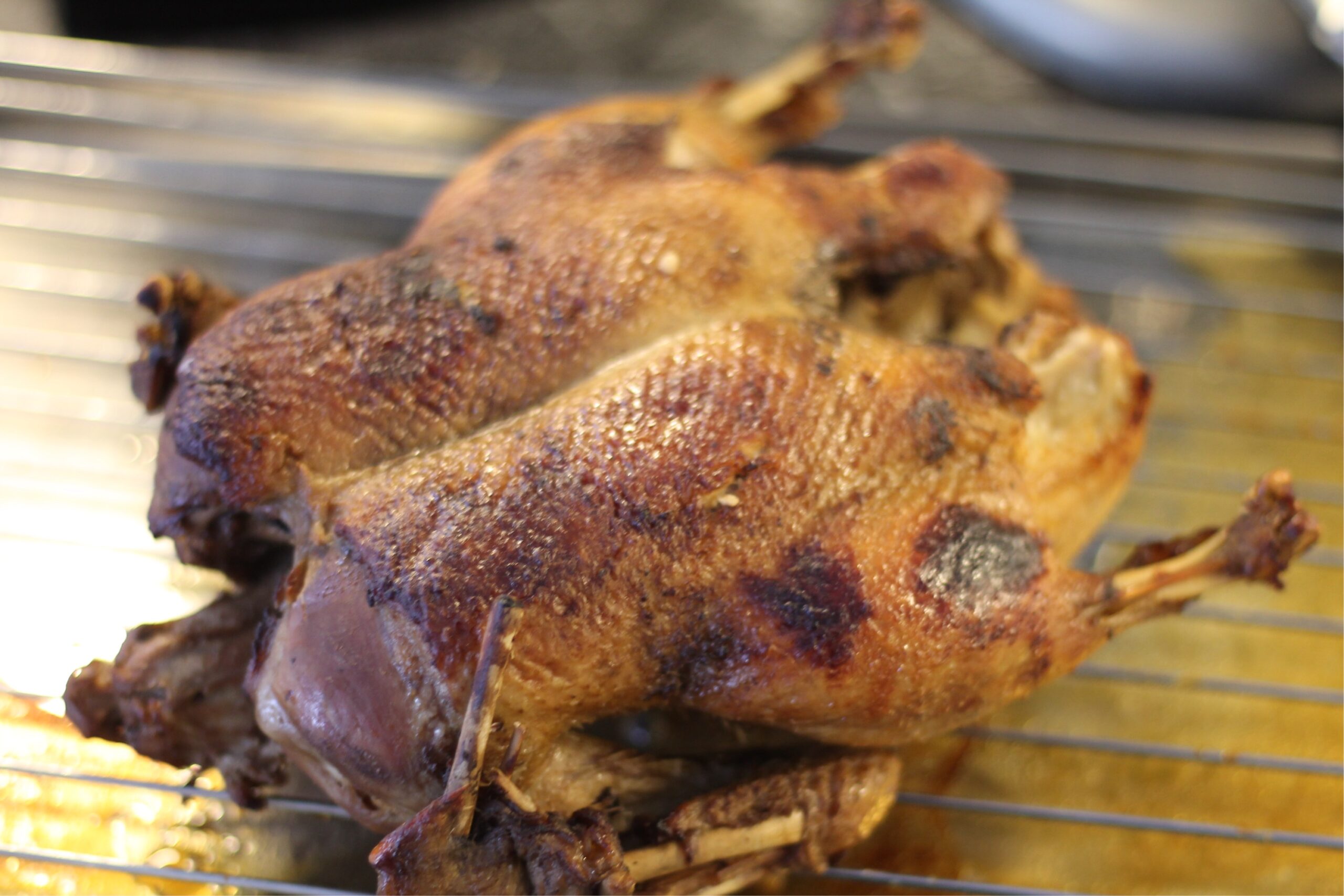
Braised Duck (Soy-Free, Dairy-Free) with Coconut Aminos
A Chinese-Inspired Comfort Dish with Deep History, Bold Flavor, and Crispy Skin Finish
Braised duck is one of those dishes that feels like it carries history in every bite—rich, aromatic, deeply savory, and slow-cooked until the meat becomes tender and infused with spice. This modern version keeps the traditional soul of Chinese braising while adapting it to be soy-free and dairy-free by using coconut aminos instead of soy sauce.
It is deeply comforting, perfect for family meals, and rooted in one of the most important cooking traditions in Chinese cuisine: red braising (hong shao).
What Does “Braised” Mean?
Braising is a cooking method that combines two steps:
- Browning food at high heat
- Slowly cooking it in a flavored liquid over low heat
In this process, the duck is first seared to build flavor, then gently simmered in a spiced liquid. The result is meat that becomes tender while absorbing every layer of seasoning.
Unlike boiling, braising uses just enough liquid to partially submerge the food, allowing both steaming and simmering to work together. This is what creates the deep, complex flavor braised duck is known for.
The Chinese History of Braised Duck
Braised duck is part of a much larger tradition in Chinese cuisine called “red cooking” or “hong shao (红烧)”, a method that slowly simmers meat in a seasoned, soy-based liquid until it becomes tender and richly colored.
This cooking style is believed to have originated in the Jiangnan region of China and is widely used across the country for pork, chicken, beef, and duck. The dish gets its signature dark reddish-brown color from soy sauce and caramelized sugar.
Red Braising (Hong Shao) Tradition
Red braising is more than just a recipe—it is a foundational Chinese cooking technique. It typically includes:
- Soy sauce for salt and umami
- Sugar for balance and color
- Shaoxing wine for depth
- Aromatics like ginger, garlic, and star anise
This method is especially common in Jiangsu and Zhejiang cuisine, where slow cooking is used to transform simple ingredients into deeply flavorful dishes. Find out more here!
Duck in Chinese Culinary History
Duck has been eaten in China for thousands of years and is deeply tied to agricultural life along the Yangtze River basin. Historical records show duck farming dates back to ancient dynasties, where poultry was used in both daily meals and ceremonial feasts. (Vision Times)
Duck became especially important in southern Chinese cuisine because:
- Ducks were widely raised in rice paddies and wetlands
- The meat has a rich fat content that benefits from slow cooking
- It absorbs braising spices exceptionally well
Over time, regional cooking styles evolved, including Cantonese and Jiangsu approaches to duck preparation.
From Red Braising to Modern Duck Dishes
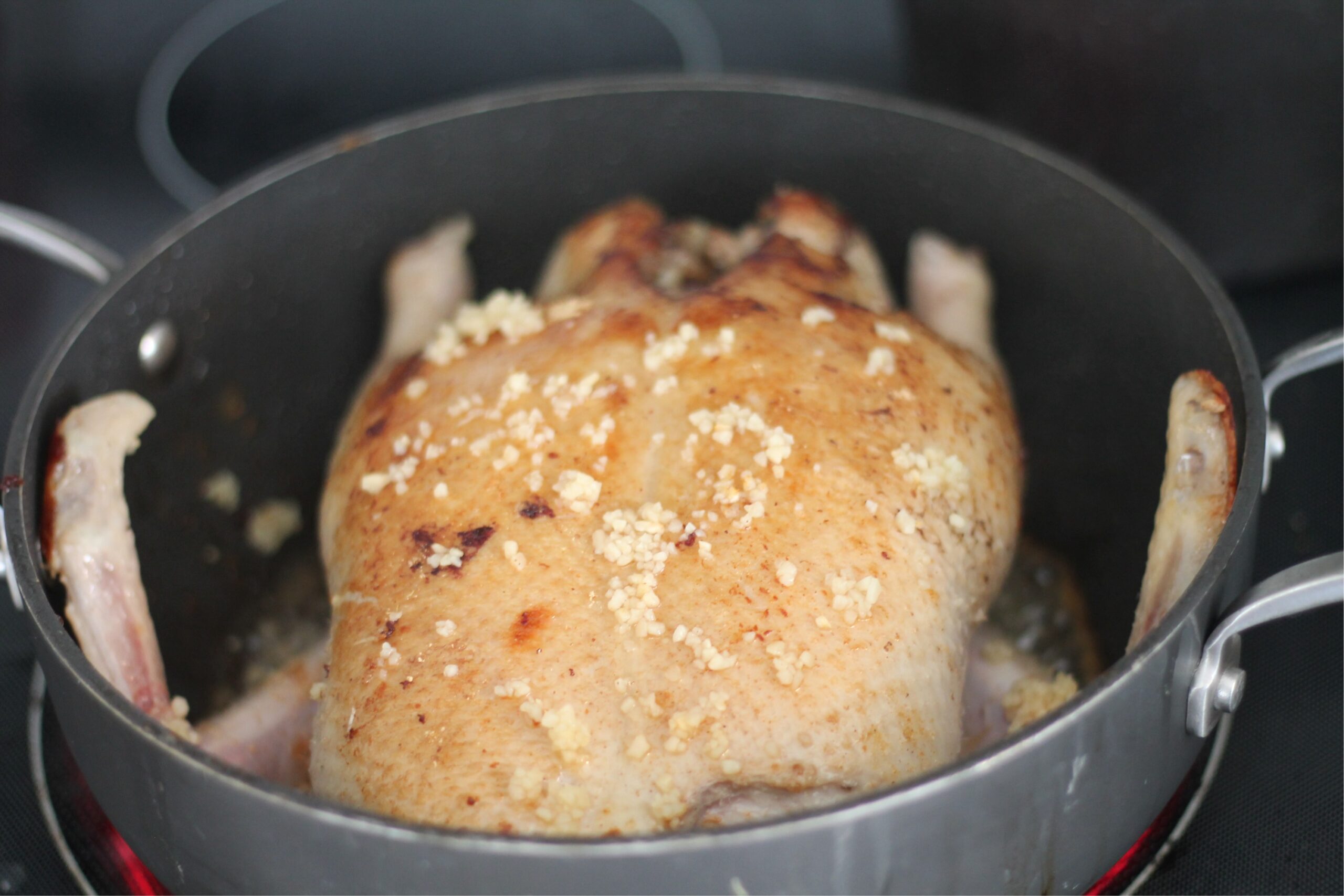
The red braising technique is also used in many famous Chinese dishes, including pork belly (hong shao rou), where soy sauce, sugar, and aromatics create a glossy, caramelized finish.
(Wikipedia)
Duck versions of red braising follow the same principle: slow cooking in a spiced liquid until the meat becomes tender and infused with flavor.
In many traditional recipes, duck is simmered with soy sauce, wine, and spices like star anise and ginger until it develops a deep, lacquered appearance and rich taste. (Alibaba)
Modern Adaptation: Soy-Free Braised Duck with Coconut Aminos
Traditional recipes rely heavily on soy sauce. In this version, we replace it with coconut aminos, a naturally fermented seasoning made from coconut sap and salt.
Coconut aminos:
- Provide umami flavor similar to soy sauce
- Are slightly sweeter and milder
- Keep the dish soy-free and often gluten-free
This makes the recipe more accessible while still maintaining the essential depth of braised duck.
Ingredients (Flavor Base)
- 4–5 lb duck
- 1 tbsp oil
- 1–1½ inch ginger, sliced (or ¼–½ tsp ground ginger)
- 6 garlic cloves
- 3 star anise
- 6 cloves (or tiny pinch ground clove)
- 3 bay leaves
- 12 peppercorns
- 4–5 dried orange peel pieces
- 1 tbsp sugar
- ½ cup coconut aminos
- 3 tbsp rice vinegar
- 3–4 cups water
- 1 tsp honey + 1 tsp warm water
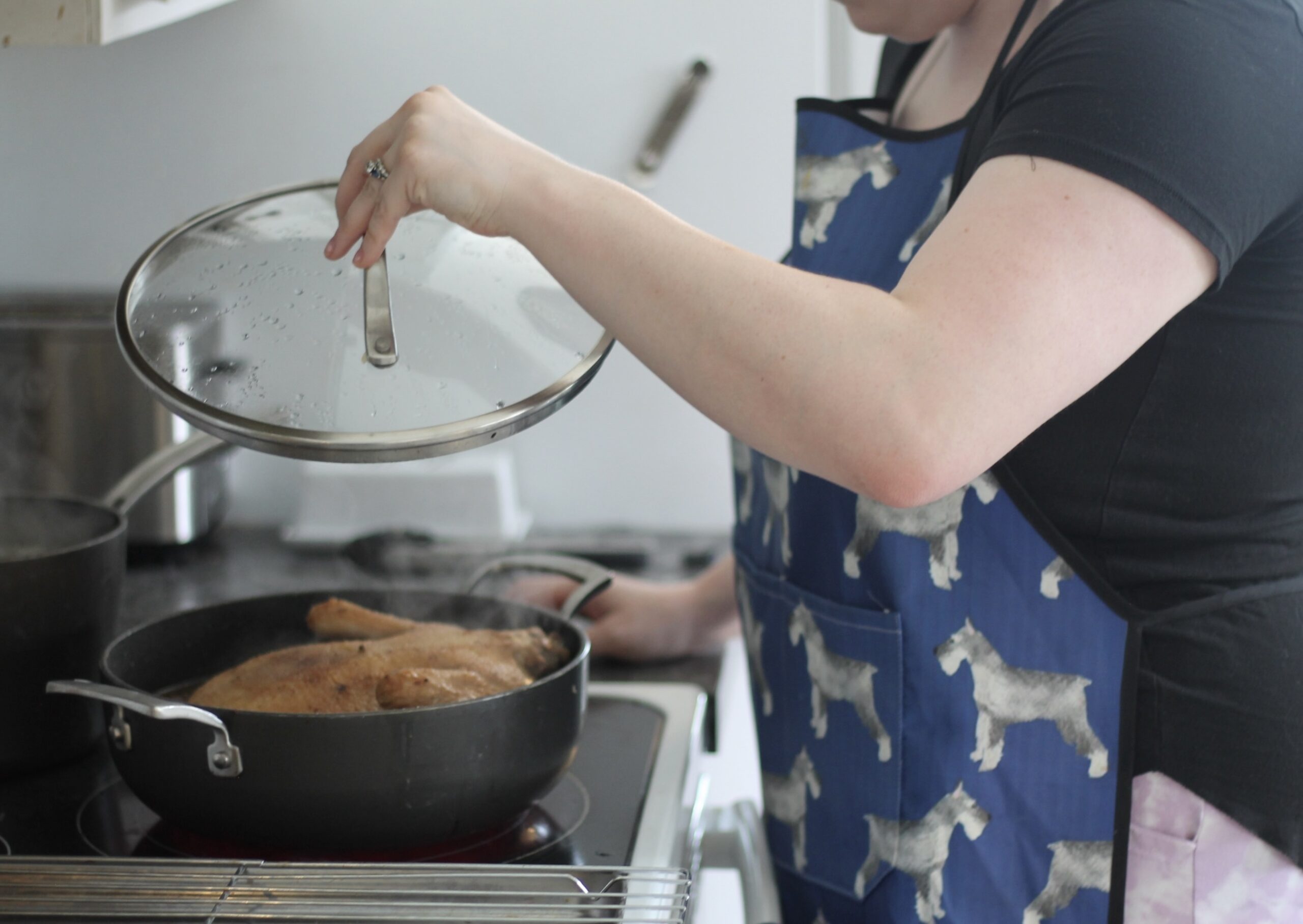
Step-by-Step Method
1. Prep the duck
Pat the duck completely dry. This is essential for browning and crisp skin later.
2. Brown the duck
Sear the duck in oil until golden. This builds deep flavor through caramelization.
3. Add aromatics
Add ginger, garlic, and sugar. Stir briefly to release fragrance.
4. Build the braising liquid
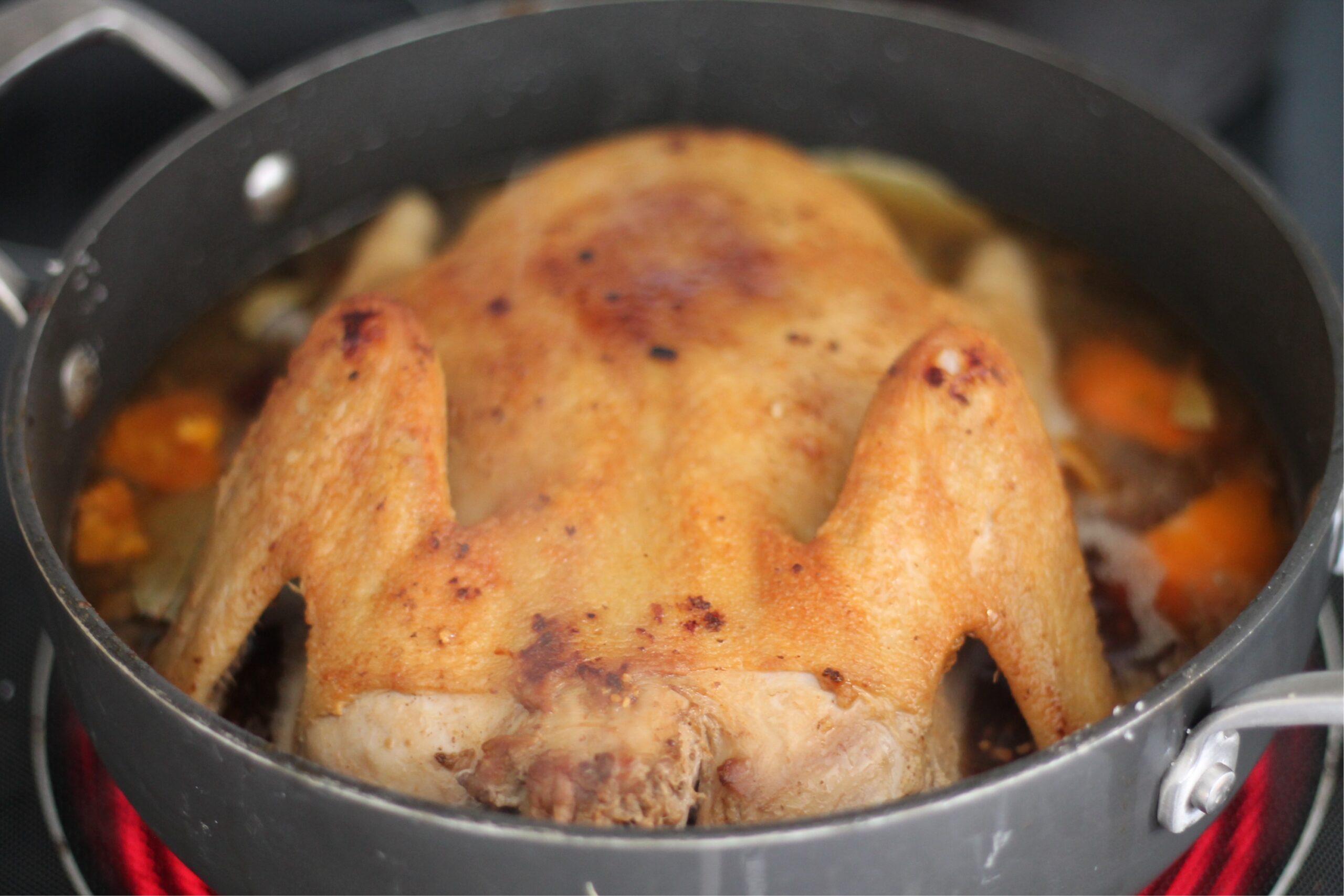
Add coconut aminos, vinegar, spices, orange peel, and water. The liquid should come halfway up the duck.
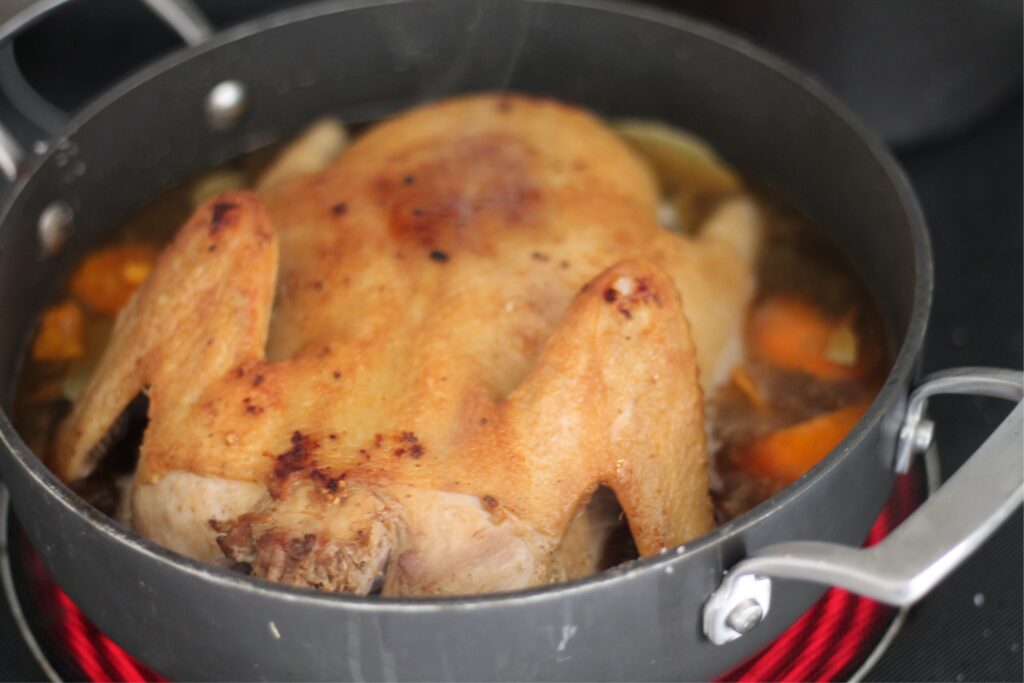
5. Slow simmer
Cover and simmer for 50–60 minutes, flipping occasionally.
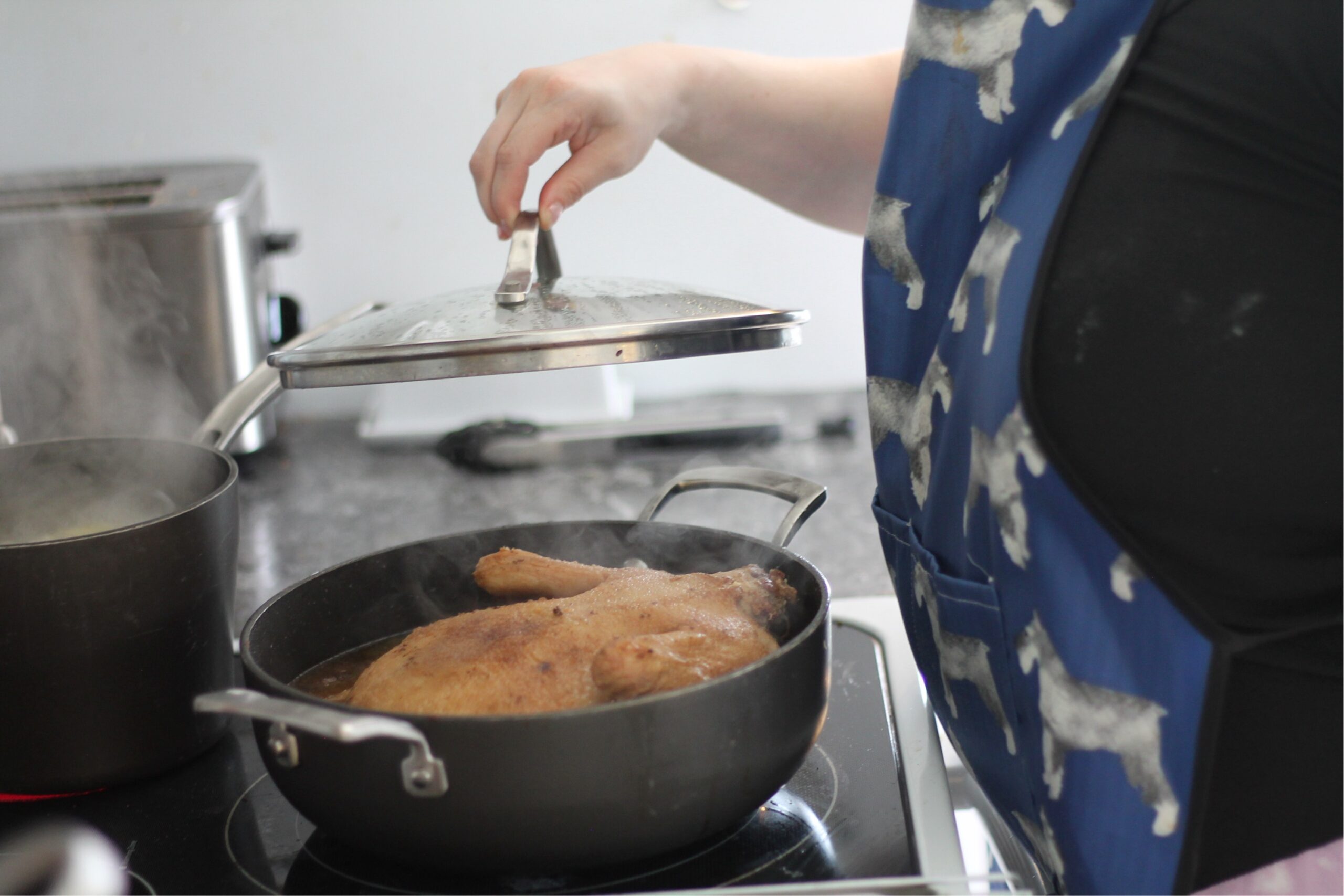
6. Crisp the skin
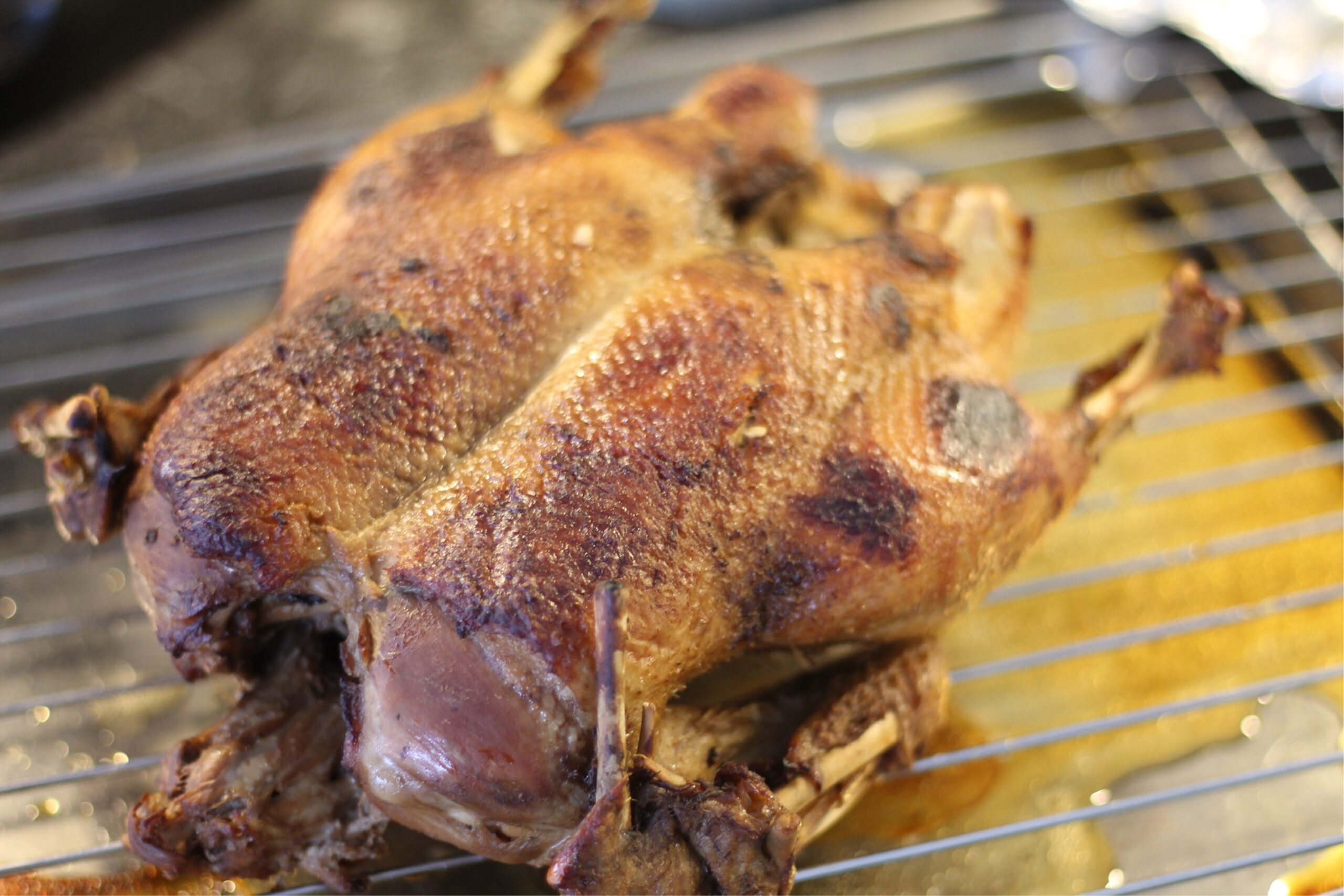
Brush with honey water and bake at 425°F for 12–15 minutes until crisp.
7. Rest and serve
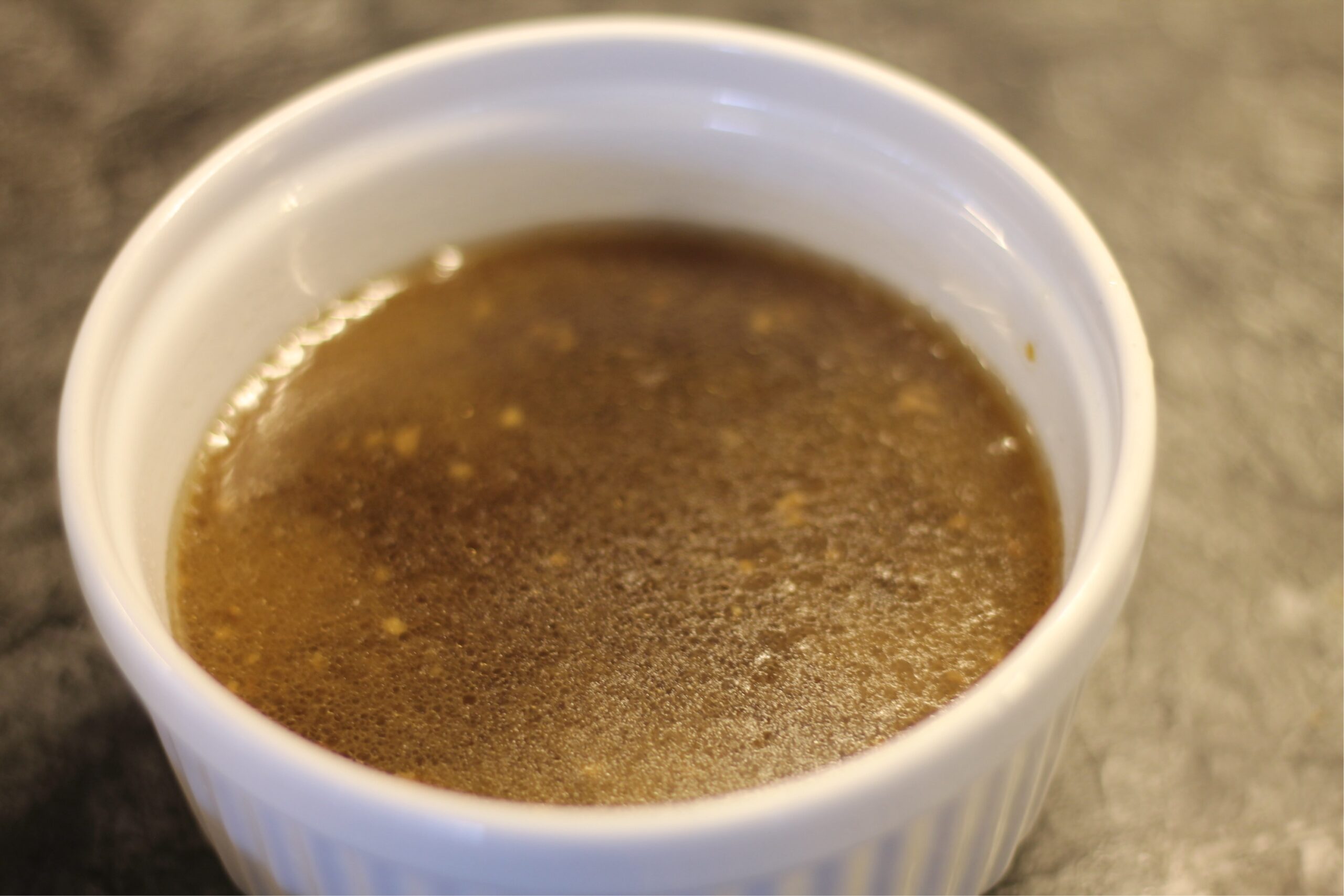
Let rest for 10 minutes before carving. Spoon braising liquid over rice or noodles.
Pro Tips for Perfect Braised Duck
1. Dry skin is everything
Moisture prevents browning and crisping.
2. Don’t rush the simmer
Slow cooking is what creates tenderness.
3. Balance the spice
Clove is powerful—use lightly. You can substitute 1/8 tsp ground clove if your store doesn’t sell cloves whole. Just note ground cloves will create a more intense flavor.
4. Orange peel matters
It adds brightness and prevents the dish from feeling too heavy.
5. Coconut aminos need adjustment
If you want stronger savory depth, reduce the sauce slightly at the end.
Final Flavor Profile
This dish is:
- Rich and savory
- Lightly sweet
- Warmly spiced
- Slightly citrusy
- Finished with crispy, glossy skin
It is a modern interpretation of a centuries-old Chinese cooking tradition, adapted for today’s dietary needs without losing its cultural roots.
Final Thoughts
Braised duck reflects the heart of Chinese cooking: patience, balance, and transformation. From ancient agricultural traditions to modern adaptations using coconut aminos, the core idea remains the same—slow cooking turns simple ingredients into something deeply flavorful and meaningful.
Understanding its history helps you see that every step in this recipe, from browning to simmering, is part of a long culinary story that has evolved across generations.
Print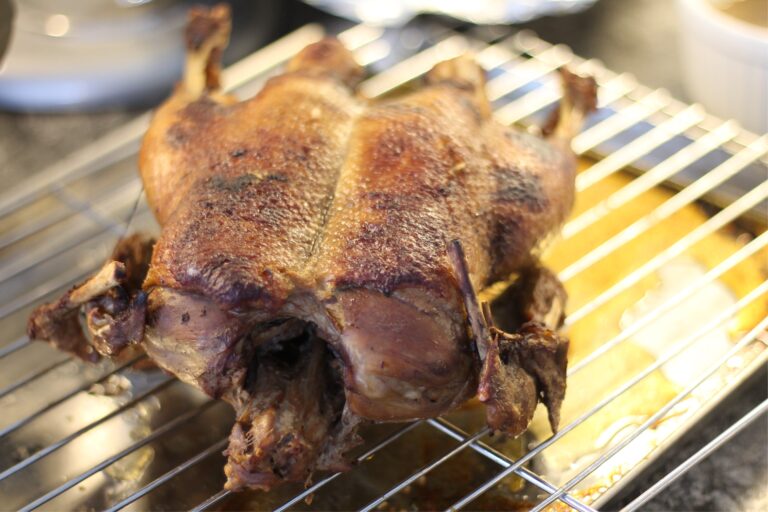
Braised Duck (Soy Free, Dairy Free)
Ingredients
Duck
- 4–5 lb duck (innards & tail removed)
- 1 tbsp olive oil
Duck seasoning
- 5 slices (12g) fresh ginger
- 6 garlic cloves, smashed
- 1 tbsp sugar
Braising sauce
- ½ cup Chinese cooking wine (Shaoxing), OR dry sherry (Sheffield)
- 1/3 cup coconut aminos
- 3 tbsp rice vinegar
- 3 star anise, OR 1 tbsp whole fennel
- 6 cloves, OR 1/8 tsp ground clove
- 3 bay leaves
- 12 whole peppercorns
- 4–5 pieces dried orange peel (I just peel one cutie orange and use that)
- 3–4 cups water
Topping
- 1 tsp honey + 1 tsp warm water
Instructions
- Rinse duck & pat dry.
- Brown duck in a large wide pot with oil.
- Add all duck seasoning; cook 1 minute.
- Add all braising sauce ingredients.
- Bring to a boil, then cover and simmer on low 50–60 minutes, flipping every 15 minutes.
- Remove duck, drain, place on a rack over a sheet pan and brush with honey water.
- Preheat oven to 425°F
- Bake 12–15 minutes, or until skin is crispy. Rest 10 minutes before carving. Serve with braised sauce.